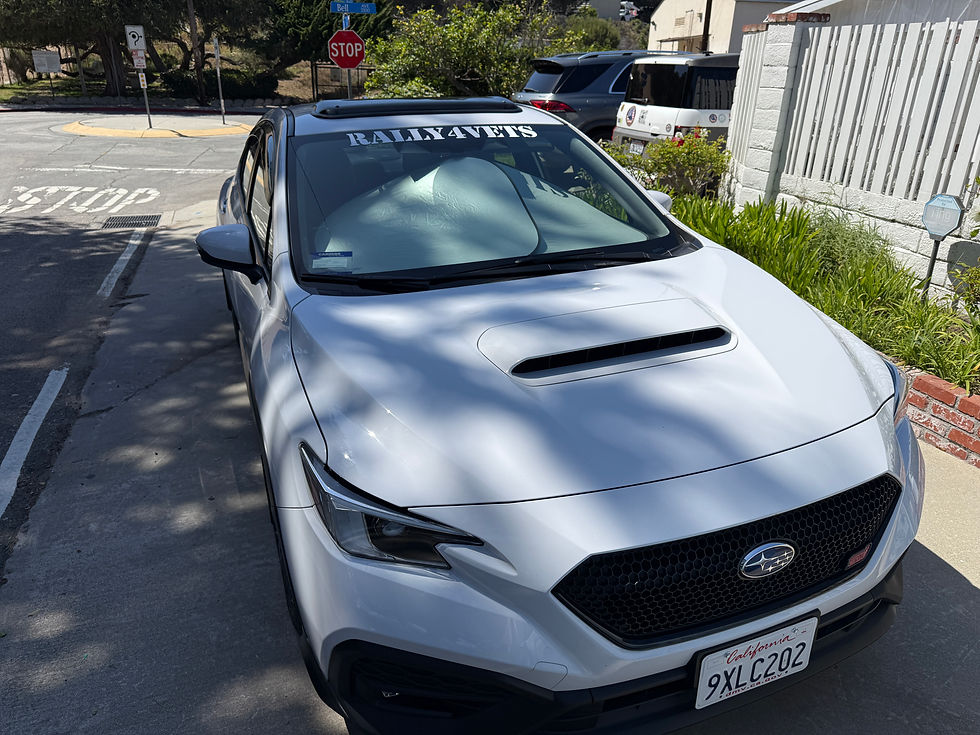
Seven Cars. One Mission. How Rally4Vets Chose Its Next Outreach Vehicle | Subaru WRX

by Robert Hess. (With help from an anonymous friend and automotive writer).
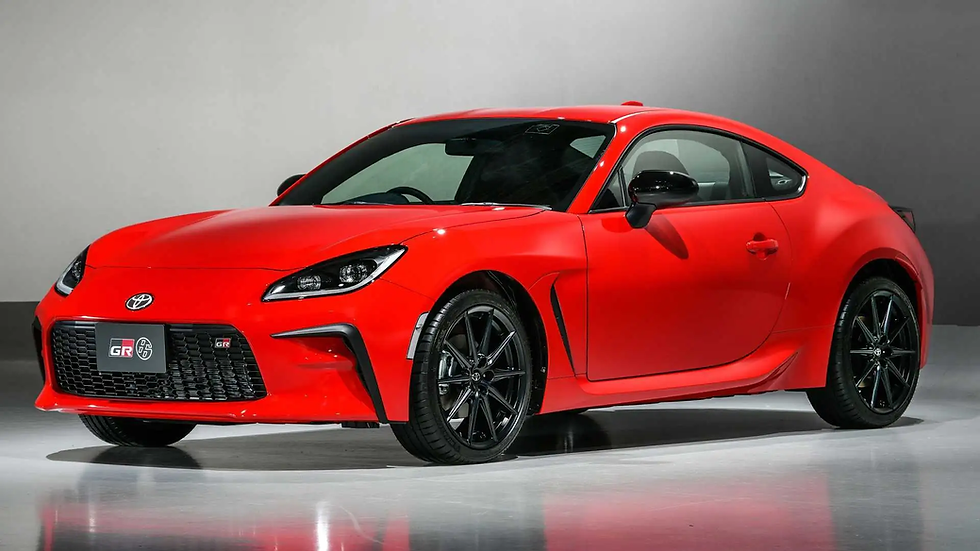
Last summer we blogged about replacing our beloved C-6 Corvette with something a bit easier [read less than 400 hp] for our sponsors and volunteers to drive on the track. And a car that is more comfortable for our annual 3,000+ mile road rallies across the US. Our first thought was a Toyota GR-86. (What's not to love there?!) But . . .
Choosing a fun car is easy.
Choosing one car that can carry a mission is a lot harder.
That was the challenge we faced as we looked for our next community outreach and experiential vehicle.
The car we choose won't live a pampered life. It needs to cross the country from Los Angeles to Washington, DC on annual 14+ trips, carry three or four people plus gear, swallow a rooftop box, show up at events looking the part, and still deliver the goods at autocrosses, SCCA Time Trial weekends, and our annual Top Dog Championship.®
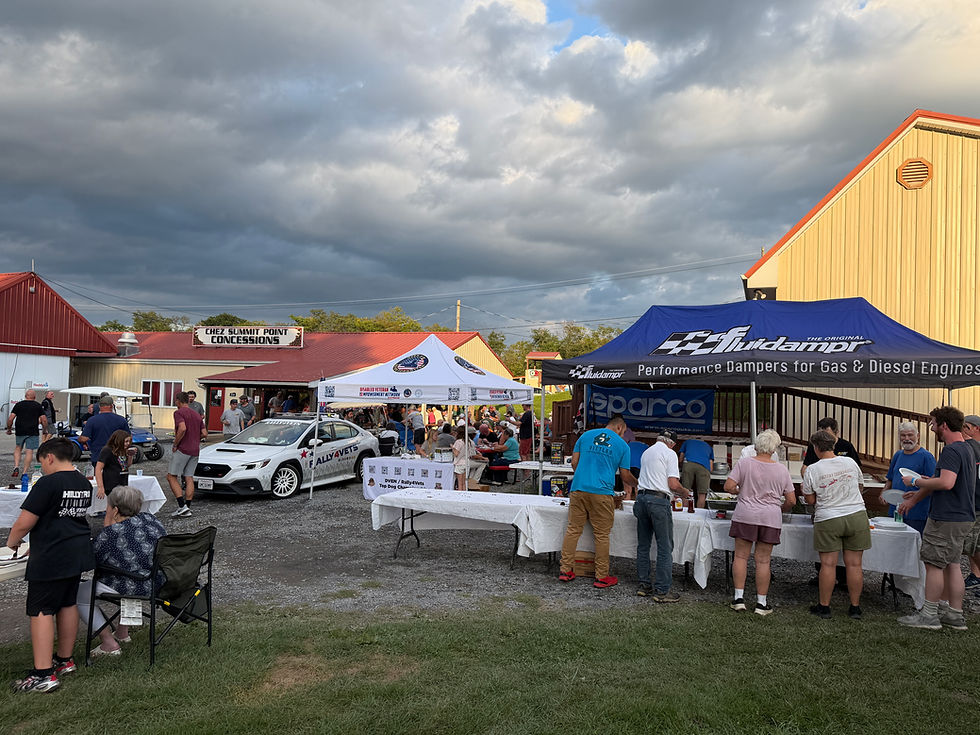
Those requirements matters because Rally4Vets isn't simply a car group with a nonprofit attached. The organization is built around motorsports, outreach, and veteran support. Our public-facing message is direct and memorable: “We Drive. They Survive."℠
The Rally4Vets mission includes veteran suicide awareness, service-dog training, and community reintegration programs, with events and partnerships designed to carry that story to the public.
So, the C-6's replacement has to do more than perform. It has to represent.
The checklist
The criteria were straightforward, even if the final decision was not.
Here are our requirements:
Seat three to four people comfortably on long cross-country drives. [8 hour days.]
Support a rooftop cargo box.
Participate in autocross, SCCA Time Trials ,and the Top Dog Championship without becoming miserable on the highway.
Be reliable, affordable to repair, and backed by a strong enthusiast community.
And, because this car will spend a lot of time meeting people, sparking conversations, and appearing at events, it needed to have personality.
That led to a diverse finalist list: Subaru WRX, Toyota GR86, Volkswagen GTI, Mazda Miata, Subaru BRZ, Mini Cooper, and Honda Civic Type R.
Each of them brought something to the table. But not one of them checked every box.
Subaru WRX: the benchmark
The WRX was always going to be hard to ignore. Subaru describes the current WRX as a four-door sports sedan with standard Symmetrical All-Wheel Drive, a turbocharged BOXER engine, and a track-tuned suspension.
Just as important for Rally4Vets, Subaru still leans into the car’s rally roots and its ability to handle a mix of surfaces and conditions.
That matters because the WRX is one of the few cars here that feels completely natural in multiple roles. It has real rear doors. It has usable rear-seat space. It can wear a roof box without looking absurd. It has enough performance to earn respect at an autocross or time trial. And it has one of the deepest enthusiast communities in the business.
Its weaknesses are easy enough to identify. It is heavier and la bit less agile than the pure sports-car choices. It is not the sharpest track scalpel in the field. And it can come off as the practical answer rather than the romantic one.
But when the assignment is “one car to do almost everything well,” practical starts to look pretty appealing.
Toyota GR86: the driver’s choice with a practical problem
If this had been a search for the most playful sports car on the list, the GR86 would have had a strong case. Toyota presents it as a focused rear-wheel-drive sports coupe, and that is exactly how it drives. It is eager, light on its feet, and the kind of car that makes an average road feel interesting.
The problem is not enthusiasm. The problem is mission fit.
The GR86 does technically offer rear seats, but anyone who has spent time around small coupes knows the difference between “has rear seats” and “works for cross-country travel with multiple adults.” For Rally4Vets, which needs genuine long-haul usability and room for gear, the GR86 came up short. It would have been a fantastic answer to a different question.
Volkswagen GTI: the smart all-rounder
The GTI has made a career out of being the grown-up enthusiast’s answer. It is quick, refined, comfortable, and genuinely useful. The hatchback body gives it excellent cargo flexibility, and it remains one of the best examples of the everyday performance car formula.
Volkswagen still positions the GTI as a practical hot hatch with real performance credentials, and that reputation is well earned.
There is a lot to admire here. On a pure rationality scale, the GTI scored well.
The GTI’s front-wheel-drive layout, tidy competence, and understated personality make it a superb daily driver, but the WRX carries a stronger sense of occasion and a more natural connection to the rally-and-motorsports image that Rally4Vets projects.
The GTI was the head choice. The WRX had a stronger claim on both head and heart.
Mazda Miata: beloved, but ruled out by reality
Everyone loves to suggest the Miata. Usually for good reason.
Mazda’s MX-5 remains one of the purest and most joyful driver’s cars on sale. It is light, communicative, and almost unfairly fun at autocross. It also enjoys one of the most passionate owner communities anywhere. [In fact, Rally4Vets has a donated 1997 M Edition we use on the track. But it doesn't check any of the cross country boxes.]
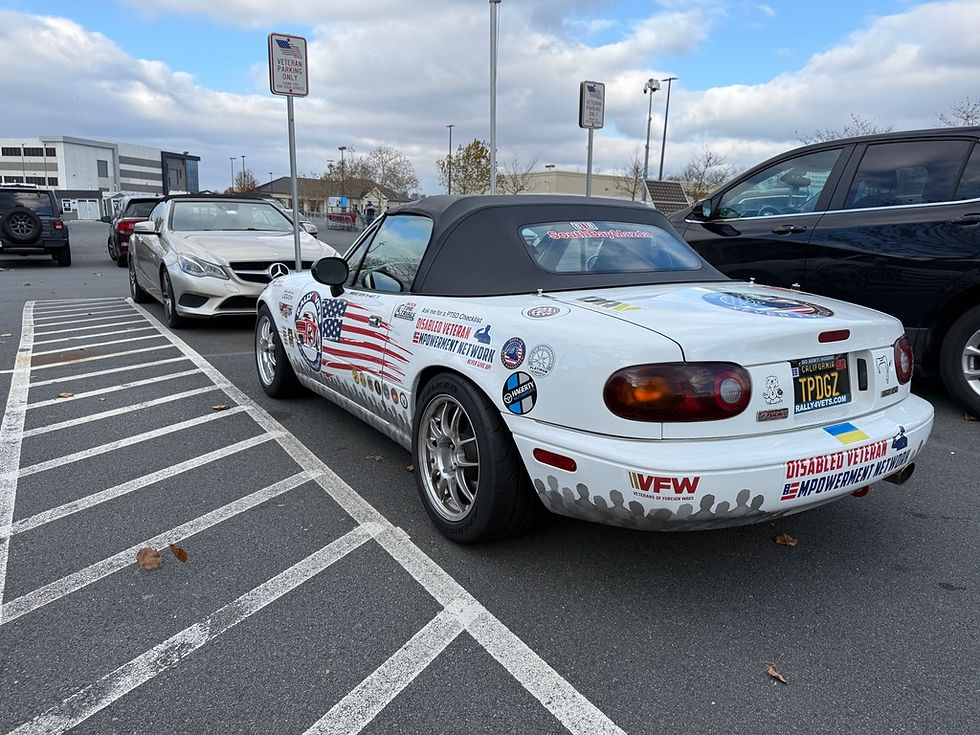
Two seats are charming on a Sunday morning. They are a problem on a two-week+ cross-country outreach trip. Limited cargo space only adds to the challenge.
A rooftop box might make for a cute photo, but it would not solve the core issue.
Subaru BRZ: close in spirit, short on utility
The BRZ offered some of the same appeal as the GR86 because, fundamentally, it is playing in the same arena. Subaru markets it as a track-capable sports coupe with a strong enthusiast bent, and it absolutely delivers on driver engagement.
Like the GR86, though, the BRZ’s issue was not character. It was versatility. Rear-seat space is limited. Cargo flexibility is limited. Its strengths come into focus when the car is being driven for pleasure, not when it is being asked to handle outreach duty, luggage, passengers, and a packed event schedule.
For an individual owner, the BRZ makes a compelling case. For an organization that needs one public-facing do-it-all vehicle, it asks for too many compromises.
Mini Cooper: big charm, smaller comfort zone
The Mini Cooper brought personality in abundance. It is distinctive, cheeky, and genuinely entertaining to drive. In four-door form, it also brings more practicality than its image sometimes suggests.
Still, the Mini never quite felt like the right long-haul workhorse for Rally4Vets. It has style, but not quite the same road-trip ease as the WRX or GTI.
It has a loyal following, but a different cultural vibe than the broad enthusiast appeal of the Subaru. And when the mission includes repeated long-distance travel plus track-day duty plus public outreach, “quirky and fun” just didn't seem the right fit.
Honda Civic Type R: the hero car with a budget problem
On pure performance, the Civic Type R may have been the most serious machine in the group. It is a track-capable performance hatch, and its capability is beyond dispute. It is fast, composed, roomy enough to be useful, and backed by enormous enthusiast respect.
But the Type R’s brilliance also creates its problem. It is expensive enough, desirable enough, and specialized enough that using it as an all-purpose outreach workhorse starts to feel excessive.
We weren't shopping for the ultimate lap-time hero. Our goal was a durable, credible, budget-conscious platform that could be driven hard, driven far, and repaired without drama.
The Type R was one of the best cars on the list. It just was not the best Rally4Vets car.
What the process made clear
By the end of the evaluation, the pattern was obvious.
Some cars were too small. Some were too specialized. Some were too expensive for the mission. Some were excellent all-rounders, but lacked the specific blend of identity, utility, and motorsports credibility Rally4Vets needed.
The best track car was not automatically the best outreach car. The cutest option was not the smartest option. The most practical option was not necessarily the most inspiring option.
Only one candidate kept showing up near the top of every category.
The final Choice? The Subaru WRX.
In the next post, we will get into why the WRX ultimately won, and why it makes so much sense as a Rally4Vets vehicle for the road, the paddock, and the mission.